
Mastic Asphalt Council (MAC) member Abbey Asphalt Roofing Ltd has played a key role in a £4.3m restoration project at the Grade II* listed Southampton City Art Gallery, marking a significant milestone in the preservation of one of the city’s most important cultural landmarks.
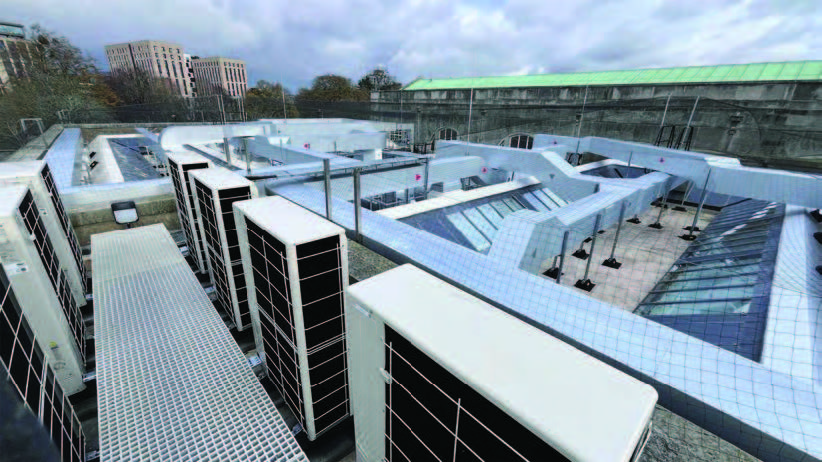 Morgan Sindall Construction began the first phase of the restoration in July 2024, working in partnership with Hampshire County Council and Southampton City Council. The project has included extensive re-roofing and refurbishment works across multiple phases, all while ensuring minimal disruption to the connected civic facilities.
The Art Gallery, based in Southampton’s burgeoning Cultural Quarter, dates back to 1939. It houses a nationally designated collection of more than 5,300 works, considered to be amongst the finest in the UK outside of London.
Sustainable Roofing Specification
A key part of the project was safeguarding the gallery’s nationally important art collection, and enhancing the building’s sustainability while preserving its historic character. Southampton City Art Gallery forms part of the Arts Council England Accelerator Programme. As part of the commitment to move to a Carbon Neutral City by 2030, the Green City Charter has been launched to create a cleaner, green, healthier and more sustainable City.
Sustainability was a key consideration in the specification of mastic asphalt for the roofing works at Southampton City Art Gallery. Mastic asphalt is well recognised for being tough, durable and long-lasting, but what is perhaps less well known is that it is one of the most sustainable and greenest building materials currently available.
With an exceptionally long lifespan, low carbon footprint and 100% recyclability, mastic asphalt has helped meet the project’s sustainability goals without compromising performance. The inherent longevity of mastic asphalt roofing significantly reduces future maintenance requirements, material replacement, and waste generation, delivering clear whole-life environmental benefits.
Abbey Asphalt Roofing’s involvement included the complete strip out and renewal of 10 roofs of varying shapes and sizes, totalling approximately 1,200m² of existing mastic asphalt. The works included the installation of an IKO Permaphalt mastic asphalt roofing system, comprising a vapour control layer, 140mm insulation, Permaphalt asphalt, and a solar-reflective protective coating.
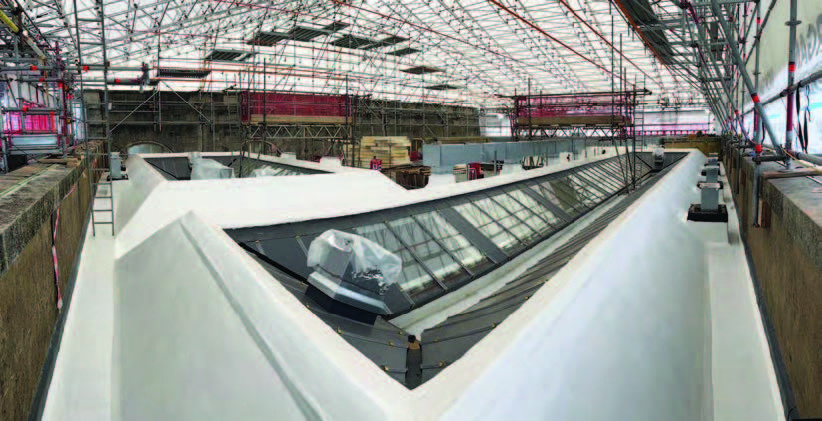 All works were carried out beneath a complex temporary roofing system to ensure full protection of the building and its contents throughout the programme. A key stipulation was that no hot works were permitted on any of the roofs due to the nationally important art collection within the gallery. This demanded careful planning and strict adherence to specific installation methods to maintain both safety and quality. Despite the complexity of the project and the building’s graded listing, the works were completed in September 2025 – five weeks ahead of the agreed programme.
The majority of the roofing areas on the project comprised flat roofs; however, the works also included four sloping “up-and-over” well roofs, which presented a significant technical challenge. These roofs required a bespoke approach due to their inclined nature, restricted access, and the requirement to integrate a high performance mastic asphalt roofing system while achieving the specified thermal and vapour control performance.
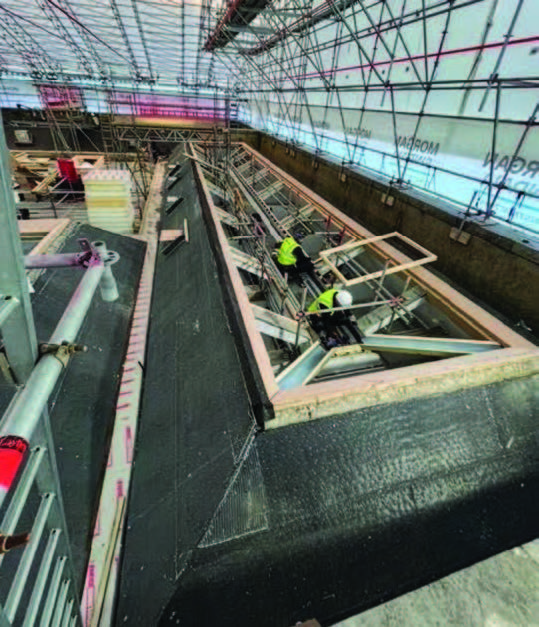
Works to the sloping roofs commenced with the complete removal of the existing mastic asphalt covering back to the structural concrete deck. The exposed substrate was thoroughly cleaned and prepared before being primed to ensure suitable adhesion. A self-adhesive vapour control layer was then installed to provide continuity of the building envelope and prevent interstitial condensation.
To accommodate the specified 140mm insulation thickness and maintain stability on the incline, doubled 3” x 3” timber battens were securely fixed at the top, middle, and bottom of each slope. Insulation boards were tightly installed between the battens to achieve the required thermal performance and prevent movement. The entire area was subsequently overlaid with plywood to form a robust and uniform substrate suitable for the mastic asphalt system.
Expanded metal lathing was mechanically fixed over the plywood. The IKO Permaphalt mastic asphalt system was then applied in three coats. Particular attention was paid to detailing at interfaces and transitions to ensure long-term durability and weather-tightness.
In total, approximately 400 linear metres of sloping roofing were completed, with each slope averaging around one metre in height. Maintaining consistent quality across these repetitive yet technically demanding details required a high level of workmanship and supervision. IKO provided ongoing technical support throughout the project, attending site regularly to inspect and log the various stages of the works.
Overcoming Challenges
 The roof refurbishment presented a number of significant challenges, particularly during the summer months. Mastic asphalt was laid at temperatures of approximately 240°C beneath a temporary plastic roof covering, which resulted in high internal working temperatures. This was very carefully managed and operatives were closely supervised to ensure careful task sequencing, regular rest breaks, and the continuous provision of fluids to maintain hydration and wellbeing. This approach ensured that health and safety was not compromised while consistently high standards of workmanship were maintained.
Logistics also proved challenging due to the scale and complexity of the project. The contract comprised 10 separate roof areas, many of which were located at differing levels across the building. Transporting hot mastic asphalt safely and efficiently to each roof area required detailed coordination to ensure the material arrived within workable timeframes and at the correct temperature.
Further complexity was introduced by the building geometry. High parapet walls were present around the perimeter of the roof areas, and in several locations the distance between the parapet wall and the sloping roof was minimal.
These restricted working spaces required a high level of skill and precision to successfully install the asphalt system, insulation build-up, and associated detailing while maintaining full system integrity and weather-tightness.
Representing the Best of the UK Roofing Industry
This project stands out as an outstanding demonstration of excellence in specialist roofing, combining technical mastery, meticulous planning, and exemplary workmanship in the face of significant complexity.
Delivered across multiple roof levels with challenging geometries, restricted access, and extreme installation conditions, the scheme demanded a level of skill, coordination, and resilience that exceeded standard project delivery. These challenges were met head-on through proactive leadership, rigorous quality control, and close collaboration between Abbey Asphalt Roofing Ltd, Morgan Sindall Construction, the architect and the manufacturer IKO.
This significant restoration project at Southampton City Art Gallery represented much more than just roof repairs – it was about safeguarding a vital cultural landmark for future generations.
This article featured within March / April 2026 edition of Roofing Today – click here to view the article.