
A recent roof refurbishment project carried out by Mastic Asphalt Council (MAC) contractor member John Fetherston Asphalt Roofing at Carrickfergus Castle presented the opportunity to combine centuries of history with modern technical excellence.
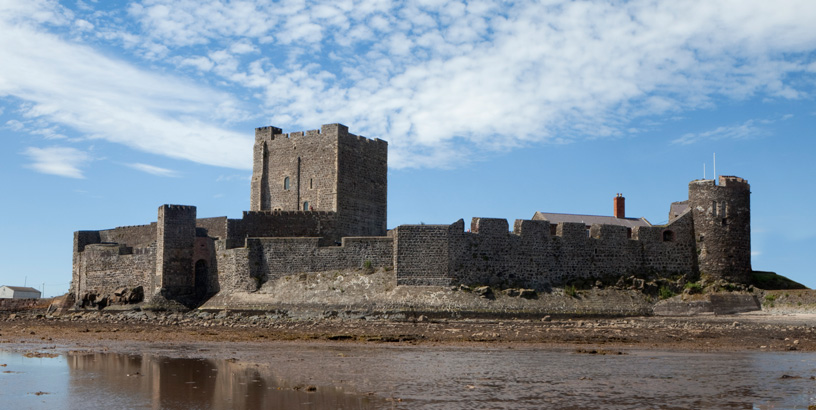
Dating back to 1177, Carrickfergus Castle is a Norman castle nestled in the seaside town of Carrickfergus, County Antrim, on the shores of Belfast Lough.
Unlike many ancient castles, Carrickfergus Castle still stands tall and proud, having formed part of Northern Ireland’s landscape for over 800 years. It served a key military role until 1928 and today it is home to historical exhibits and a collection of cannons from the 17th to the 19th centuries.
Carefully conserved and maintained over the years, the roof refurbishment has demonstrated how traditional materials such as mastic asphalt continue to play a vital role in protecting the UK and Ireland’s historic built environment.
Carrickfergus Castle remains a heritage landmark of national importance. Any intervention, particularly to its structure, needed to balance performance with preservation. This was the challenge set before the architect – the Government’s Construction and Procurement Delivery (CPD) division – the main contractor Pikehill Contracts, and the roofing contractor John Fetherston Asphalt Roofing, when the roofing area needed to be re-asphalted.
The Role of Mastic Asphalt in Heritage Roofing
Mastic asphalt has long been recognised as one of the most reliable and versatile waterproofing systems available. Its unique properties – seamless application, durability, and resistance to water ingress – make it particularly suitable for complex roofs and exposed environments.
For heritage projects, these characteristics are even more valuable. Mastic asphalt can be applied with precision around intricate detailing, such as parapets and upstands, without the need for intrusive fixings that could damage historic fabric. Durable and long-lasting, it reduces the need for repeated maintenance which is an important factor on heritage structures.
At Carrickfergus Castle, these benefits made mastic asphalt the natural choice for re-waterproofing the roof while safeguarding the integrity of the original stonework.
Key Challenges
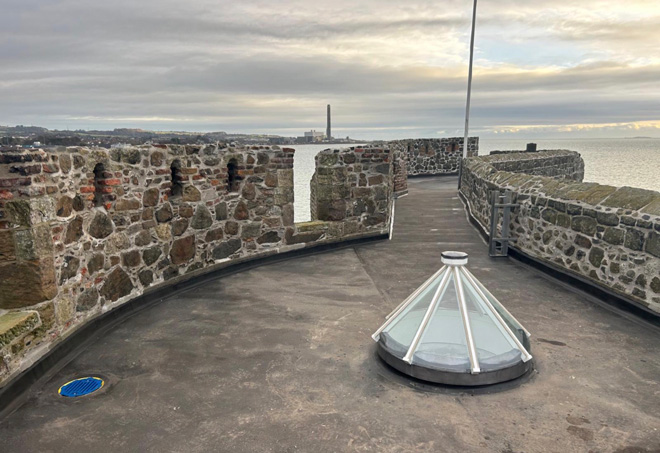
The project scope included the removal and replacement of the existing asphalt system, installation of four new outlets, and the dressing of a skylight.
This was no straightforward undertaking. One of the most significant challenges was removing the old asphalt without damaging the existing stonework, to prepare it for the new asphalt. The castle’s decorative stone detailing and irregular roof geometry introduced a number of complexities.
Of particular note was a transition zone where the roof shifts from a flat surface into a steep vertical slope behind a walkout area. Such features demanded particular attention to detail, as any weakness in waterproofing could otherwise have resulted in moisture ingress.
Skilled Workmanship in Practice
 The success of the Carrickfergus Castle project was rooted in the craftsmanship demonstrated by the John Fetherston Asphalt Roofing team.
The process began with the careful removal of the existing asphalt using a technique known as “raggling.” This involved gently heating the asphalt and manually easing it away using hand tools, ensuring the delicate stonework remained intact. Such traditional methods are essential when working on heritage structures, where mechanical removal techniques could cause irreparable damage.
Once prepared, the upstands and skylight were treated with a three-coat mastic asphalt application, ensuring robust waterproofing at all junctions. New vertical spigot outlets, complete with Alumasc Harmer components, were installed and seamlessly integrated into the system.
A separating fibreglass membrane was then laid across the roof area. This layer plays a critical role in accommodating thermal movement, allowing the asphalt to expand and contract without compromising its integrity.
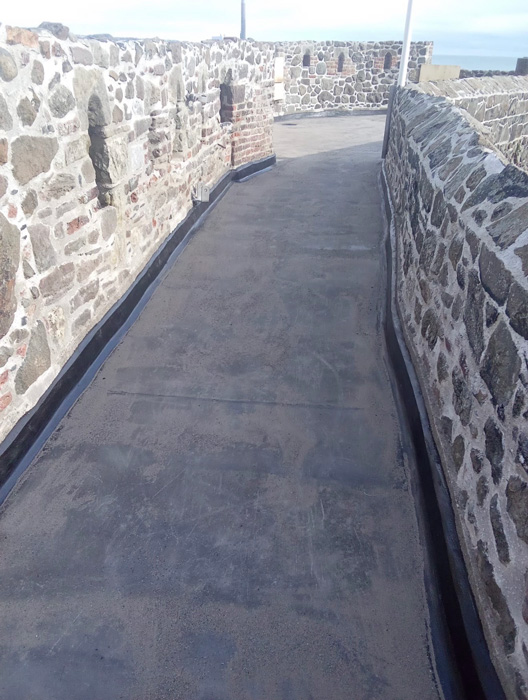
Once the membrane was in place, the team proceeded with the re-asphalting process on the flat area, comprising the application of a high performance two-coat mastic asphalt system manufactured by IKO: a 10mm layer of roofing grade asphalt followed by a 15mm paving grade finish, with 6-8mm of grit added. Applied by hand using traditional floats, the asphalt was poured from copper buckets into defined bays and spread by hand using floats.
Planning, Logistics and Collaboration
Delivering a project of this nature required meticulous planning and coordination. From the outset, a detailed programme of works was developed, incorporating allowances for any weather delays and logistical constraints.
Access to the site posed a particular challenge. Due to the castle’s layout and preservation requirements, it was not feasible to position the asphalt mixer within the castle courtyard. Instead, a crane was used to lift materials from outside the site directly to the roof level. This not only improved efficiency but also eliminated significant manual handling risks associated with transporting hot asphalt through narrow staircases and across uneven terrain.
The John Fetherston Asphalt Roofing team coordinated with the main contractor Pikehill Contracts to set up a temporary access/walkway route to minimise disruption to the castle’s surrounding areas while the crane was present. Smaller, specialised tools were used for applying asphalt in tight spaces where a standard float/trowel would not fit.
Close collaboration between all stakeholders ensured that the project remained aligned with both technical specifications and conservation objectives. Regular communication and on-site supervision were key to maintaining quality and addressing challenges as they arose.
 Safety, Training and the Future of the Trade
Health and safety considerations were central to the project’s success. A comprehensive risk assessment informed every stage of the works, with a clear focus on eliminating hazards wherever possible.
Importantly, the project also provided valuable training opportunities for apprentices. Under close supervision, two apprentices were actively involved in the works, gaining hands-on experience. This commitment to training reflects the wider industry’s dedication to developing the next generation of skilled asphalt professionals.
A Lasting Contribution to Heritage Conservation
The re-asphalting of Carrickfergus Castle stands as an excellent example of how traditional materials and modern expertise can work together to preserve historic structures. Through careful planning, skilled workmanship, and the inherent performance advantages of mastic asphalt, the project has delivered a durable, high performance roofing solution that respects and protects the building’s rich heritage. The project was completed on budget without incurring additional costs.
For the Mastic Asphalt Council, projects such as this highlight the ongoing relevance of mastic asphalt within the built environment – particularly in the conservation of historic assets where quality, longevity, and sensitivity are paramount.
The project was so impressive that it was shortlisted as a finalist in the mastic asphalt category for the National Federation of Roofing Contractors (NFRC) 2026 Roofing Awards.
As Carrickfergus Castle continues to overlook Belfast Lough, its renewed roof ensures that this historic landmark will endure for years to come.
This article featured within the 2026 Traditional Roofing supplement of Roofing Today – click here to view the article.